Originally published by super-achiever.com · retrieved 2026-10-30T17:59:05+00:00. Republished here with permission.
The scores, test results, and opinions below are the original source's own and are not independent lab testing or ratings performed by NutritionByMias.
JALL Full-Screen Wake Up Light Review
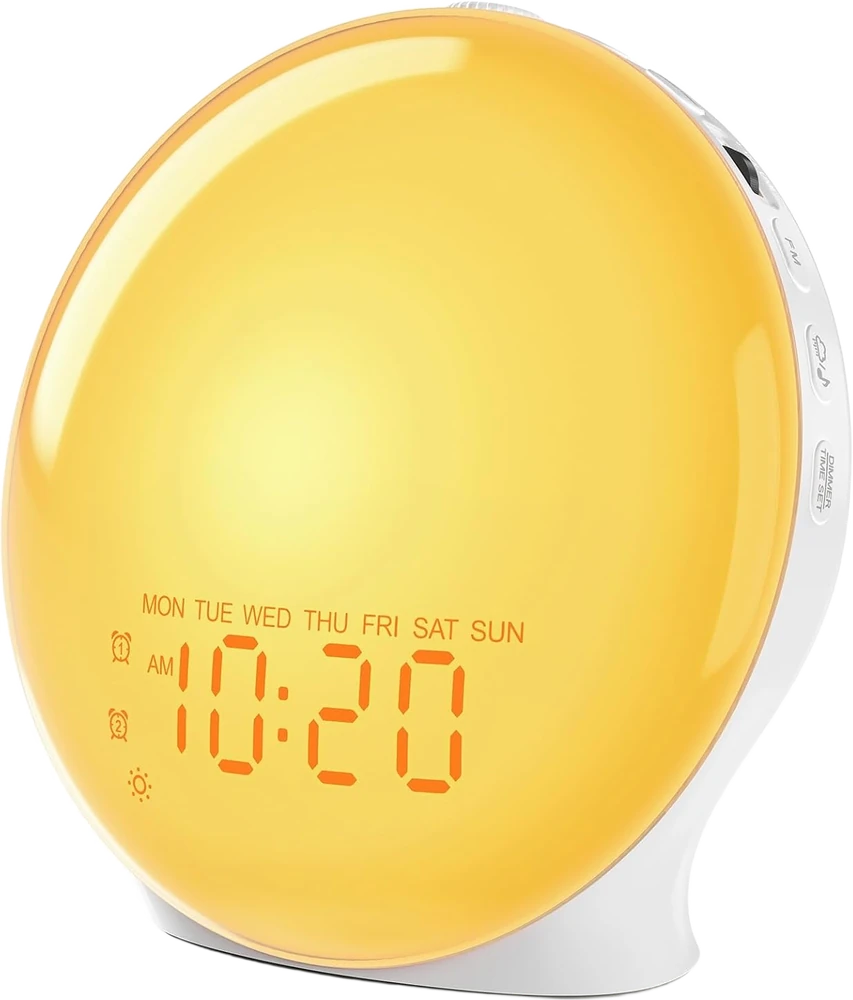 #7 of 8 · Best for couples / dual alarm✓ Product photos checked Sep 7, 2026
Real retailer photo, cut out. Label unedited.
Buy it. Two truly independent alarms behind a big full-screen sunrise — the shared-bedroom pick under $50. The JALL Full-Screen’s dual alarm profiles (each settable every-day/weekday/weekend) solve the couples problem no premium pick addresses, and the broad panel, 25 sounds, white noise, FM and Bluetooth make it a strong value with no app or subscription.
$46
Why It Scores 7.8 — And The Label Line Behind Each Number
Light quality
30% of score
The full-screen panel is the format’s genuine advantage: broad, even, room-filling light with a 10-60 minute adjustable ramp and 17 lamp colors, throwing a more spacious dawn than budget domes. The score stays mid-tier because pedigree is where the money went missing — color accuracy through the ramp and peak tuning aren’t in the Philips clinical league, and no validated lux figure backs the panel.
- Light
- Full-screen sunrise panel, 10-60 min ramp, 17 colors
Wake reliability
20% of score
The big panel plus loud sound options give it more raw wake power than most budget clocks, and the deep-sleeper marketing isn’t baseless. But there’s no dedicated escalating backup-beeper failsafe, so it can’t make the oversleep-proof guarantee the HF3650 makes. Reliable for average sleepers at high volume; insurance-grade it is not.
Features
20% of score
The densest feature list per dollar on our page: two fully independent alarm profiles (the category rarity that earns its badge), 25 natural sounds plus white noise, FM radio, a 5W Bluetooth speaker, 17 lamp colors, snooze — and no app or subscription anywhere. The white noise is a looped track rather than the Dreamegg’s true noise-color engine, which is the honest ceiling on the score.
Controls & usability
20% of score
Everything runs from on-device buttons with no app dependency — the right architecture — and programming two profiles is straightforward once learned. The control feel is budget-tier: more buttons and menu steps than the Hatch’s three-button polish, and the interface rewards a session with the manual. Perfectly livable; not premium.
Value
10% of score
Under $50 for dual independent alarms, a big light panel, 25 sounds, white noise, FM and Bluetooth is the strongest raw value on our list next to its wood-grain sibling. For a shared bedroom it’s arguably the only rational budget buy, since no premium pick offers two profiles at any price here.
- Price
- ~$46
- More Specs
- Alarms
- 2 independent profiles (every-day / weekday / weekend each)
- Sound
- 25 natural sounds + white noise, FM radio
- Speaker
- 5W Bluetooth speaker for phone audio
- App / sub
- None — on-device buttons, no subscription
Photos checked.This product has no Supplement Facts panel; the retailer’s listing photos were reviewed Sep 7, 2026.
Marketing Claims Vs. Reality
Dual alarms with independent schedules for two sleepers.
The listing confirms two separate alarm profiles, each configurable for every-day, weekday-only or weekend-only repeat — the genuine dual-schedule capability our couples badge rests on, and a rarity at any price on our list.
Wake-up light designed for heavy sleepers.
The broad full-screen panel and loud sound options do raise its wake power over typical budget clocks, so the positioning isn’t empty. But it lacks the loud escalating backup-beeper failsafe that defines a true anti-oversleep design (Philips HF3650), so we mark the heavy-sleeper framing PARTIAL: more wake power, no guarantee.
25 natural sounds plus white noise, FM radio and Bluetooth speaker.
The listing confirms the 25-sound on-device library, a white-noise option, FM radio and the 5W Bluetooth speaker. Note the honest distinction we draw in the review: the white noise is a sound-library track, not a true multi-color noise engine like the Dreamegg’s.
Simulated sunrise wakes you gently and naturally.
The 10-60 minute adjustable gradual ramp is a genuine dawn simulation consistent with the category’s controlled evidence for gentler waking (Gabel 2013; Giménez 2010) — applied honestly as category-level evidence, with the light’s budget-tier pedigree stated plainly.
What Our Test Actually Found
Dual independent alarms are the feature nobody premium bothered to build
Here’s the odd gap in this category: the Hatch, both Philips units and the Lumie — every premium pick on our list — assume a single wake schedule. The JALL’s two fully independent profiles, each with its own every-day/weekday/weekend logic, are the only real answer on the page for a couple on different shifts, and they cost under $50. That’s why this unit holds its slot on our performance-first list despite mid-tier light: it does a job the expensive clocks simply don’t attempt. If that job is your job, the ranking above #6 is largely irrelevant to you.
One sunrise, two sleepers — the physics you have to accept
The honest caveat we put in the listicle belongs here too: light fills a room, so the earlier alarm’s sunrise reaches the later sleeper. In practice couples report this matters less than feared — a dawn ramp is far gentler to sleep through than a buzzer, and the later riser often drifts back off — but if your wake times differ by hours, or the later sleeper is light-sensitive, two small clocks (one per nightstand) may genuinely serve you better than any shared unit. We’d rather lose the sale than skip the caveat.
The ‘heavy sleeper’ label is half-earned
Amazon’s listing markets this at heavy sleepers, and the hardware supports half the claim: the full-screen panel throws more light at the bed than budget domes, and the sounds go loud. What’s missing is the other half — a dedicated escalating beeper failsafe that guarantees the wake when light and pleasant sounds fail, which is the specific engineering that makes the Philips HF3650 our actual heavy-sleeper pick. Our scoring splits the difference precisely: Wake reliability 7.6, well above bare-bones budget units, well below insurance grade.
The value math only works because nothing is paywalled
At ~$46 the JALL undercuts the premium picks by $70-130 while carrying the longest feature list on the page — but the number that makes it a keeper is zero: no app required, no account, no subscription, all 25 sounds and both alarm profiles on-device forever. Our ranking philosophy penalizes clocks that gate function behind logins or memberships, and this unit simply doesn’t. Pair that with the dual alarms and the Bluetooth-speaker bonus, and the 9.0 value score is the easiest number on this card to defend.
Full analysis: all pros & cons (9), buy if / skip if
- Two genuinely independent alarm profiles — the only real couples solution on our list
- Generous full-screen panel throws broad, even, room-filling light
- 25 sounds, white noise, FM radio AND a 5W Bluetooth speaker — with no app or subscription
- 17 lamp colors and adjustable brightness double as a proper bedside lamp
- Outstanding feature-per-dollar value under $50
- Light quality and color accuracy aren’t in the Philips clinical tier
- No escalating beeper failsafe despite the heavy-sleeper marketing
- The room-filling sunrise reaches both partners — the earlier alarm wakes the room
- Budget-tier control feel; programming two profiles takes a manual session
- Two people with different wake times share the bedroom — the dual independent alarms are the point
- You want a big, room-filling light panel that doubles as a 17-color bedside lamp
- You want 25 sounds, white noise, FM and a Bluetooth speaker with no app or subscription
- You want maximum clock per dollar — this is the most feature-dense unit under $50
- You want clinical-tier light — the Philips HF3520 (#2) is the validated ~300-lux benchmark
- You’re a true heavy sleeper — the Philips HF3650’s (#3) beeper failsafe is the real answer, not marketing
- Your wake times differ by hours — a small clock on each nightstand may beat one shared sunrise
The JALL Full-Screen’s dual alarm profiles (each settable every-day/weekday/weekend) solve the couples problem no premium pick addresses, and the broad panel, 25 sounds, white noise, FM and Bluetooth make it a strong value with no app or subscription. The light isn’t clinical-tier and the room-filling sunrise reaches both sleepers — but for two schedules on one nightstand at this price, it’s the pick.
Most sunrise clocks quietly assume one sleeper per bedroom. The JALL Full-Screen Wake Up Light is the pick on our list that doesn’t: its two truly independent alarm profiles — each with its own time and its own every-day, weekday or weekend schedule — let a couple on different shifts share a single clock without reprogramming it every night. Behind that headline feature sits a generous full-screen light panel that throws a broad, even sunrise across the room, 25 natural sounds plus white noise, FM radio, and a 5W Bluetooth speaker — all operated from on-device buttons with no app and no subscription, for well under $50.
The honest limits are exactly the ones the price implies. The light is generous in size but not in pedigree — color accuracy and ramp tuning aren’t in the Philips clinical tier, and there’s no escalating beeper failsafe despite the deep-sleeper marketing. And the physics of a shared bedroom cut both ways: one room-filling sunrise reaches both partners, so the earlier riser’s dawn is the later riser’s too. For shared bedrooms on a budget, though, nothing else on the list solves the two-schedules problem at this money. Here’s the full breakdown.
The shared-bedroom pick — buy it for the dual alarms and the value, not for the light pedigree.

The JALL Full-Screen Wake Up Light earns its place on our list by solving a problem every premium pick ignores: two people, two schedules, one nightstand. Its two independent alarm profiles with per-profile weekday/weekend logic are unique on the page, the big full-screen panel throws a genuinely room-filling dawn, and the supporting cast — 25 sounds, white noise, FM, a Bluetooth speaker, 17 lamp colors — is the longest feature list here, all under $50 with nothing app-locked or subscription-gated. As a shared-bedroom value buy, it’s the pick, and 7.8 reflects real merit, not budget charity.
Buy it with the two limits in view. The light is generous but not clinical — if dawn quality itself is what you’re paying for, the Philips HF3520 exists — and the heavy-sleeper marketing stops short of a true beeper failsafe, which only the HF3650 delivers. And remember the physics: one sunrise fills one room, so couples hours apart on wake times may be better served by two small clocks. For everyone else sharing a bedroom and a budget, this is the honest answer.
If This Doesn’t Fit — Try These
 03
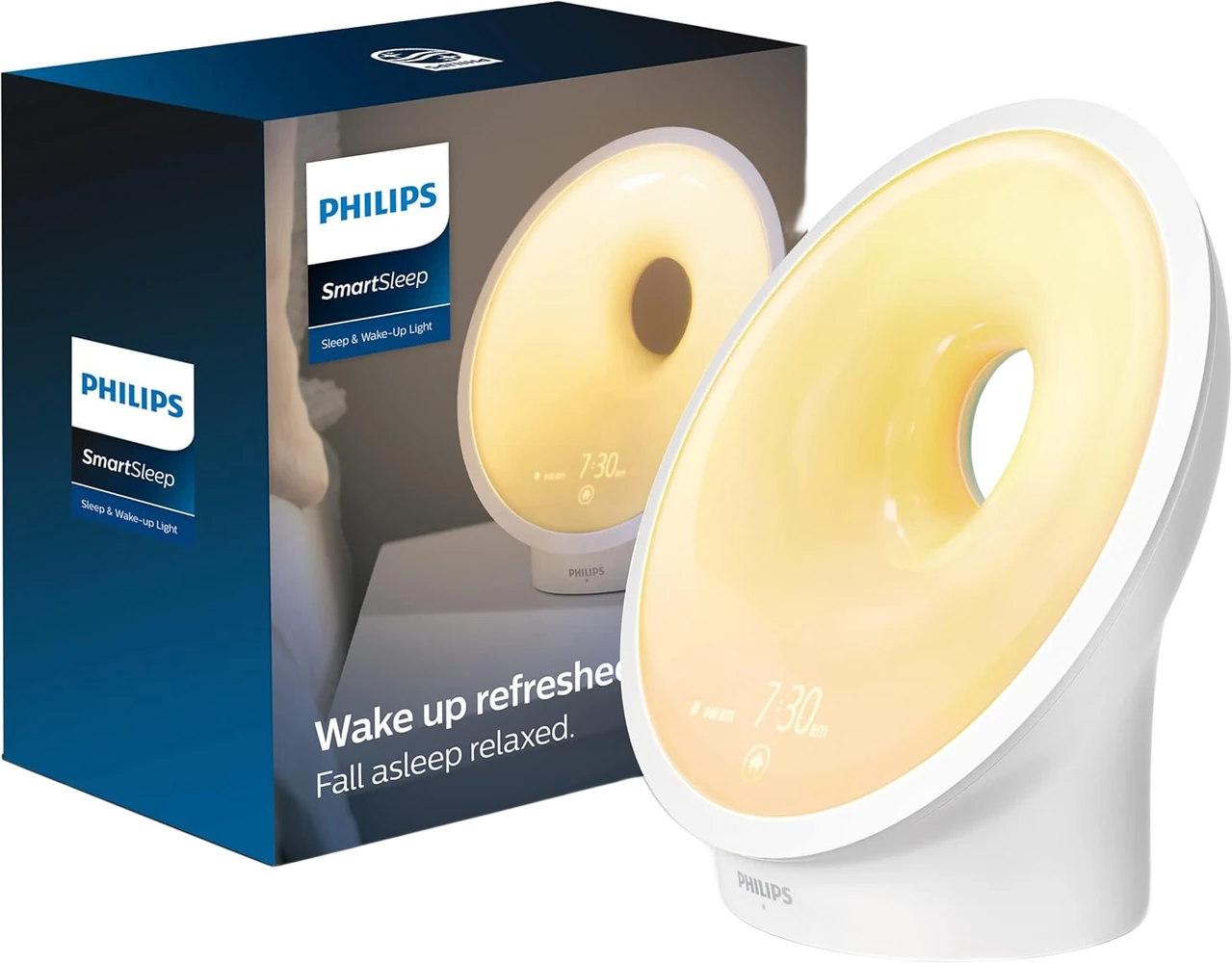
Philips SmartSleep HF3650
Most people don’t need to spend up to the HF3650 — but if alarms have historically failed you, this is the one to buy.
 08
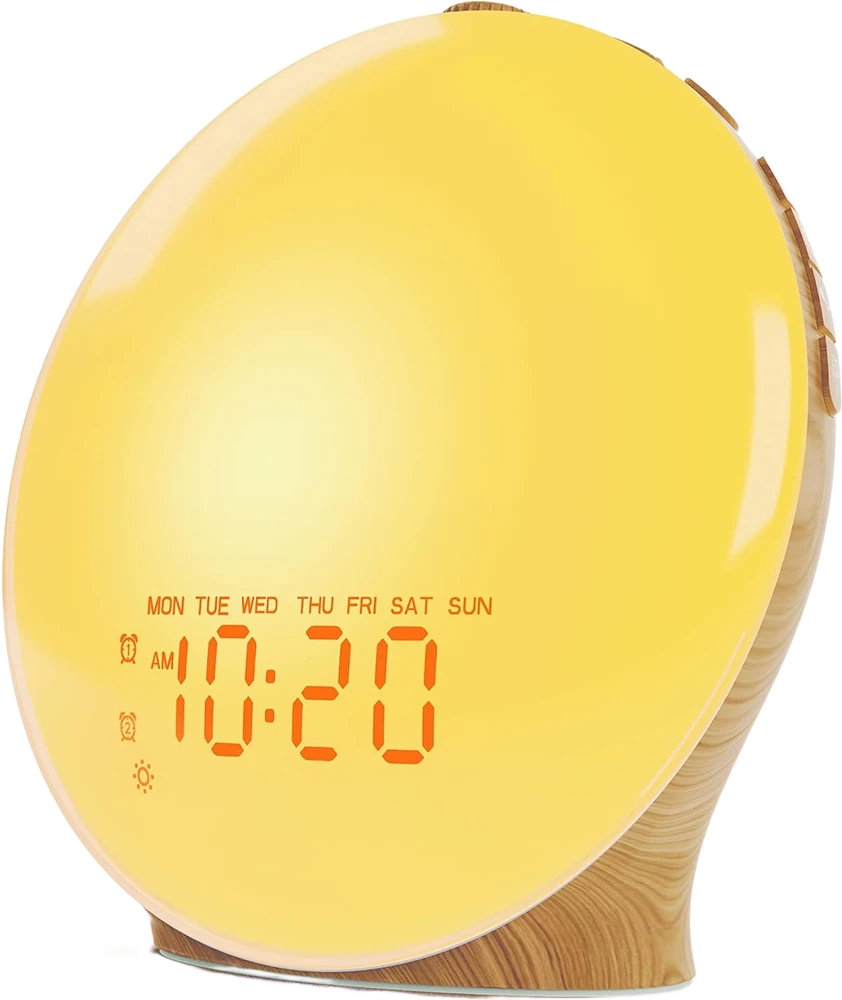
JALL Wake Up Light
If you just want to try a sunrise wake-up without spending much, this is the right starting point — and it does the basics honestly.
 04
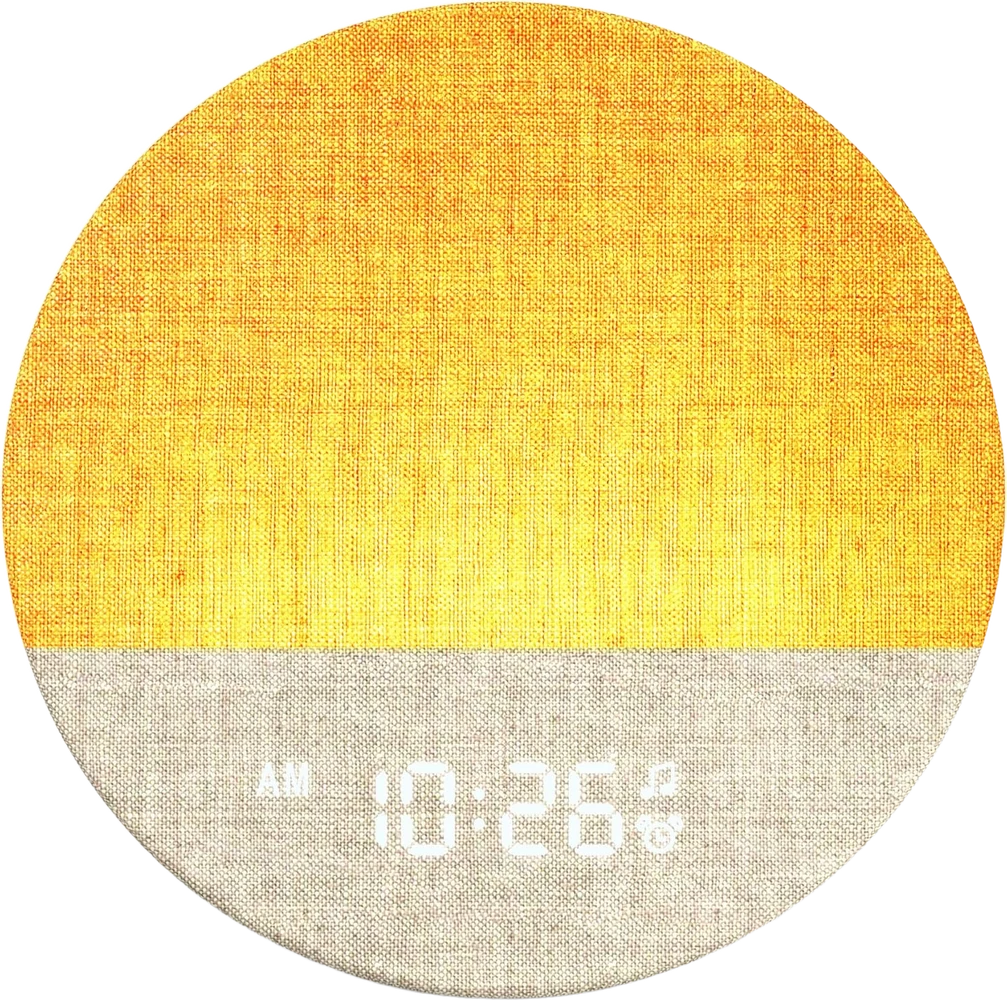
Dreamegg Sunrise 1
If you want a sunrise clock that doubles as a real sound machine, this is the pick — and it earns that label honestly, carrying true white, pink and brown noise rather than a few looped nature tracks.
Quick Answers
How do the two independent alarms actually work for a couple?
Each of the two alarm profiles is fully separate: its own time, its own repeat schedule (every day, weekdays only, or weekends only), and its own wake settings. That means a partner on a 5:30 a.m. shift and one starting at 8 can program the clock once and never touch it again — no nightly reprogramming, which is the practical failure of single-alarm clocks in shared bedrooms. One physical reality to accept: the sunrise is light, and light fills the room, so the earlier alarm’s dawn will reach both of you. Couples with very different wake times sometimes still end up happier with a small clock on each nightstand — we say so honestly in the listicle too.
Is the JALL Full-Screen good enough for heavy sleepers?
It’s marketed at deep sleepers, and the broad full-screen panel plus loud sound options do give it more raw wake power than a small-dome budget clock. But we hold the honest line from our ranking: it has no dedicated loud escalating backup-beeper failsafe, which is the specific feature that defines the true heavy-sleeper pick, the Philips HF3650 (#3, ~$180). If your oversleeping is occasional, the JALL’s big light plus a firm alarm tone at high volume will likely do it for a quarter of the price. If missing an alarm has real consequences in your life, buy the failsafe, not the marketing.
What does ‘full-screen’ mean and does it matter?
Instead of a dome or ring lamp, the entire front face of the unit is the light panel — so the sunrise comes off a large, flat surface that throws broad, even light across the room. Practical consequences: the dawn feels roomier and less like a point source, coverage reaches a bed more evenly, and the panel doubles as a substantial bedside lamp with 17 color options and adjustable brightness. What it does NOT mean is clinical-tier light quality — the color accuracy and ramp tuning aren’t in the Philips league, which is exactly how we scored it (7.4 on Light quality against the HF3520’s 9.6).
Does it need an app or subscription, and what’s the Bluetooth for?
No app and no subscription — alarms, light, sounds and radio are all set from on-device buttons, and nothing is paywalled. The 5W Bluetooth speaker is a bonus feature: you can pair your phone and use the unit as a bedside speaker for podcasts, audiobooks or music, which at this price is a genuinely unusual extra. The 25 natural sounds and white noise are stored on the device itself, so the core clock never depends on your phone being nearby.
Sources & Further Reading
3 sources — studies link to PubMed, product specs to the manufacturer
- [1] Gabel 2013 PMID 23841684 — Effects of artificial dawn and morning blue light on daytime cognitive performance, well-being, cortisol and melatonin levels. Lab study, 17 sleep-restricted participants: a dawn simulation gradually rising to 250 lux improved cognitive performance, mood and well-being and raised wake-time cortisol versus dim and blue light. The category-level case for waking to a gradual ramp like the JALL’s 10-60 minute dawn.
- [2] Giménez 2010 PMID 20653451 — Effects of artificial dawn on subjective ratings of sleep inertia and dim light melatonin onset. Field study with a wake-up light: artificial dawn significantly reduced self-reported sleep inertia — but did NOT shift dim-light melatonin onset, and light alone is not a guaranteed waker. The evidence frame behind our PARTIAL verdict on the unit’s heavy-sleeper marketing.
- [3] Amazon listing 2026 — JALL Full-Screen Wake Up Light Sunrise Alarm Clock — dual alarms, 25 sounds, FM (Amazon product listing). Product facts on this page — the two independent alarm profiles with every-day/weekday/weekend scheduling, full-screen sunrise panel with 10-60 minute ramp and 17 colors, 25 sounds plus white noise, FM radio, 5W Bluetooth speaker and button-only no-subscription operation — verified against the live Amazon listing (ASIN B081CHLF46, checked 2026-07-20).
Affiliate disclosure: every Amazon link uses our Associates tag (superachieverclub-20). We earn a small commission at no cost to you; it funds independent reviews. We never accept payment to change a ranking.
Affiliate Disclosure: This page contains affiliate links. The linked affiliate partner may earn a commission from qualifying purchases, at no additional cost to you. For republished material, product recommendations belong to the credited source.