Originally published by super-achiever.com · retrieved 2026-10-30T17:56:45+00:00. Republished here with permission.
The scores, test results, and opinions below are the original source's own and are not independent lab testing or ratings performed by NutritionByMias.
Gaia Herbs Rhodiola Rosea (Liquid Phyto-Caps) Review
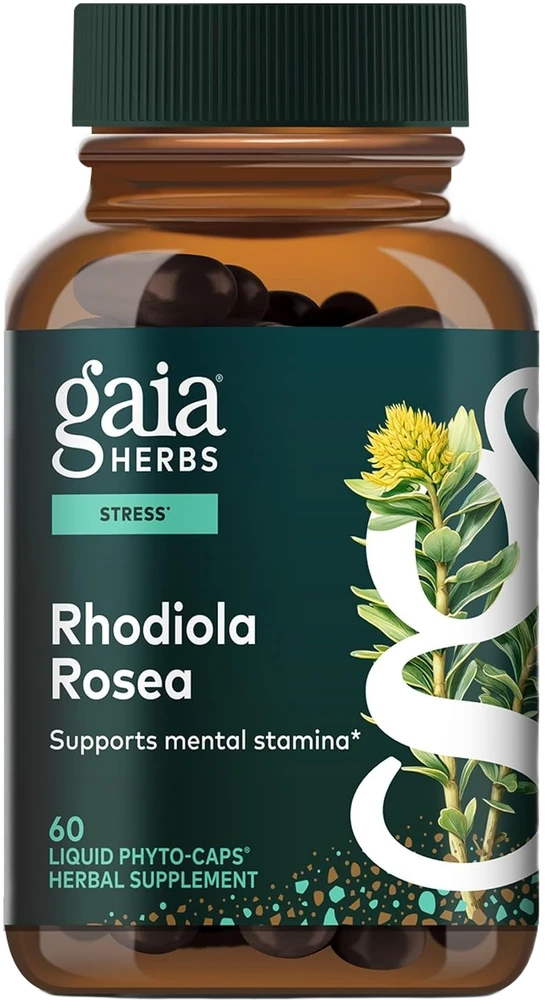 #7 of 9 · Trusted Brand, Unverifiable Actives✓ Label verified · Supplement Facts read Aug 27, 2026
Real retailer photo, cut out. Label unedited.
Consider it. Trustworthy brand, half-declared actives. If you value herbal traceability and a liquid extract, Gaia is appealing, and the numbers hold up better than an earlier version of this review said: at the labelled 2 capsules a day you get 240 mg of extract and 12 mg of rosavins, which lands inside the 200-400 mg trial window and matches the rosavin delivery of a 400 mg SHR-5 dose.
~$26~$0.43 per ~240 mg liquid cap
Why It Scores 6.8 — And The Label Line Behind Each Number
Standardization & Extract Match
30% of score
Half-declared: the label states rosavins at 6 mg per 120 mg capsule (about 5%, above the 3% SHR-5 benchmark), but it never states a salidroside percentage. That’s meaningfully better than a fully undeclared extract, but still short of a product that guarantees both sides of the studied 3% rosavins / 1% salidroside ratio.
- Standardization
- Rosavins 6 mg per 120 mg cap (~5%); salidroside not stated
Dose vs Clinical Range
25% of score
120 mg of extract per capsule, and the label directs 1 capsule twice daily — 240 mg/day, squarely inside the 200-400 mg trial window. At that dose the declared rosavins work out to 12 mg/day, matching the rosavin delivery of a 400 mg SHR-5 dose; only the salidroside side of the dose is unconfirmed.
- Dose
- 120 mg extract/cap (240 mg/day at label’s 2-cap dose)
Third-Party Testing
20% of score
Meet-Your-Herbs lot-level traceability is genuinely useful, and Gaia publishes its own purity and potency testing claims. No third-party seal (NSF, USP, cGMP) or outside lab name appears on the label or product gallery, so treat those claims as brand-published, not independently verified.
- Testing
- Meet-Your-Herbs traceability; testing claims are Gaia’s own (no third-party seal shown)
Form & Bioavailability
10% of score
A vegan liquid Phyto-Cap of organic Siberian root extract — the format is well tolerated, with a clean ingredient list (vegetable glycerin, vegan capsule, water). There is no rhodiola-specific human evidence the liquid extract is better absorbed than standardized powder caps.
- Form
- Liquid Phyto-Cap (organic Siberian root extract)
Value per Clinical Dose
15% of score
~$26 for 60 capsules (a 30-day bottle at the labelled 2 caps/day, about $0.87/day) is the priciest here, and you’re paying a premium for a product that still leaves salidroside — half of the studied active pair — undeclared.
- Count
- 60 vegan liquid caps
- Cost per dose
- ~$0.43/cap (~$0.87/day at label’s 2-cap dose)
Label verified. Every figure read from the Supplement Facts photo, Aug 27, 2026.
Marketing Claims Vs. Reality
Liquid Phyto-Caps absorb better than powdered extract
There is no rhodiola-specific human evidence that Gaia’s liquid extract is better absorbed than standardized powder caps; the fatigue trials used dry SHR-5 extract (Olsson 2009, PMID 19016404).
You can verify the active rosavin/salidroside content
The label states rosavins at 6 mg per 120 mg capsule (about 5%), so that half of the studied pair is confirmable. It never states a salidroside percentage, so the other half of the active content cannot be confirmed from the label.
What Our Test Actually Found
Correction: the label does state rosavins — 6 mg per capsule
An earlier version of this review said Gaia’s Rhodiola Rosea Liquid Phyto-Caps state no rosavins or salidroside percentage at all, and listed the dose as ~240 mg extract blend per capsule. The Supplement Facts panel reads: Organic Siberian Rhodiola root extract 120 mg per capsule, with a sub-row of Rosavins 6 mg (about 5%); salidroside is not listed; Suggested Use is 1 capsule 2 times daily (240 mg extract, 12 mg rosavins per day). We re-read the label on Sep 3, 2026 and revised the oneLiner, lead, tldr, specs, criteria bodies, claims, findings and verdict to match, moved Standardization & Extract Match from 3 to 6.0 and Dose vs Clinical Range from 7 to 8, and moved the overall score from 5.6 (skip) to 6.8 (consider).
Traceability isn’t the same as full standardization
Gaia’s Meet-Your-Herbs program tells you where the herb came from and that it’s the right species — valuable, and it does go one step further than a fully undeclared extract: the label states rosavins at 6 mg per capsule. What it still doesn’t tell you is the salidroside figure, the other half of the studied ratio.
You pay the most for a half-declared extract
At ~$26 it’s the priciest cap here, and it’s the only product on this list that leaves salidroside undeclared — rosavins are printed at 6 mg per cap, but that half-declaration doesn’t fully offset paying the most for the least-verifiable extract.
Full analysis: all pros & cons (6), buy if / skip if
- Strong lot-level Meet-Your-Herbs traceability and Gaia’s own published purity/potency testing claims
- Vegan liquid Phyto-Cap format from a respected herbalist brand
- Organic Siberian rhodiola root extract with strong species/purity assurance
- Well tolerated and clean-label
- No salidroside figure on the label — rosavins (6 mg/cap, about 5%) are stated, but the studied 3%/1% spec is only half-verifiable
- Most expensive per cap on the list
- Strong lot-level Meet-Your-Herbs traceability and Gaia’s own published purity/potency testing claims
- Vegan liquid Phyto-Cap format from a respected herbalist brand
- Organic Siberian rhodiola root extract with strong species/purity assurance
- No salidroside figure on the label — only half of the studied rosavins/salidroside spec is verifiable
- Most expensive per cap on the list
If you value herbal traceability and a liquid extract, Gaia is appealing, and the numbers hold up better than an earlier version of this review said: at the labelled 2 capsules a day you get 240 mg of extract and 12 mg of rosavins, which lands inside the 200-400 mg trial window and matches the rosavin delivery of a 400 mg SHR-5 dose. What it still doesn’t declare is a salidroside percentage, so only half of the studied spec is confirmable. On a standardization-first list that’s a real but partial miss, not a disqualifying one.
Gaia Herbs earns genuine trust: lot-level Meet-Your-Herbs traceability, its own published testing claims, and a vegan liquid Phyto-Cap of organic Siberian rhodiola root extract. For a category where the actives are the entire point, though, it has a real gap — it declares rosavins (6 mg per 120 mg cap, about 5%) but never states a salidroside percentage. You can confirm half of the studied rosavins/salidroside spec, not the whole thing.
A defensible pick once you accept the missing salidroside figure

Gaia is a quality, trustworthy herbal brand, and its panel states one of the two studied actives: rosavins at 6 mg on the 120 mg capsule (about 5%, above the 3% SHR-5 benchmark). At the label’s directed dose of 1 capsule twice daily, that’s 240 mg of extract and 12 mg of rosavins a day — squarely inside the 200-400 mg trial window and matching the rosavin delivery of a 400 mg SHR-5 dose. What it still doesn’t give you is a salidroside figure, so half of the studied 3% rosavins / 1% salidroside spec remains unconfirmed. If you want a traceable, organic, well-tolerated liquid extract and can live with that one gap, it’s a reasonable pick. If you want both halves of the studied ratio guaranteed on the label, choose a standardized 3% rosavins / 1% salidroside product instead.
If This Doesn’t Fit — Try These
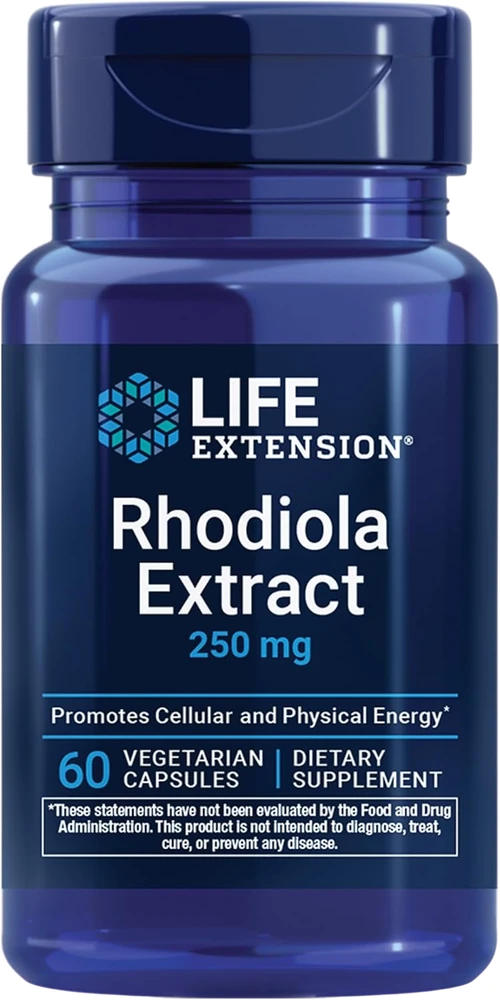 01
Life Extension Rhodiola 250 mg
This is the cleanest match between what you swallow and what the trials actually tested.
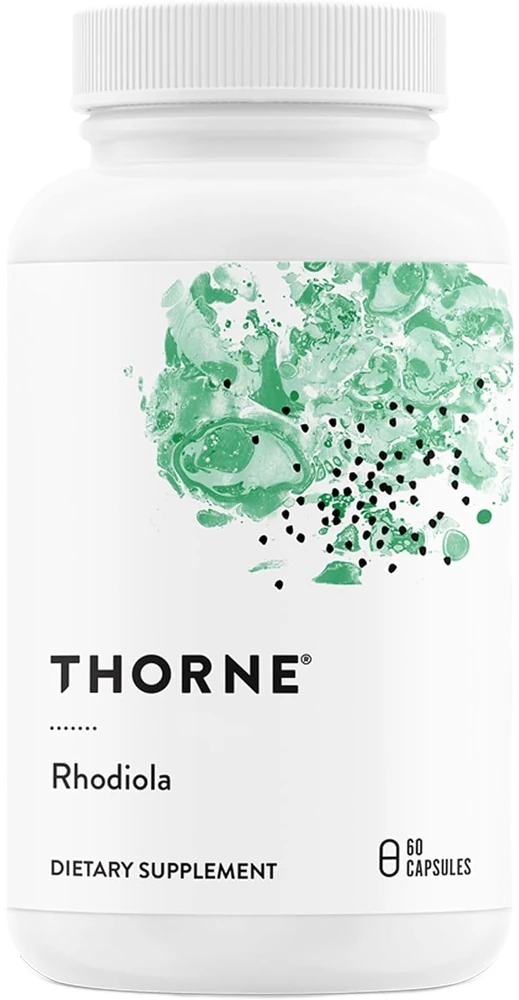 02
Thorne Rhodiola
If independent testing matters most — you want verified label contents and contaminant screening — Thorne is the pick.
Quick Answers
Isn’t Gaia a high-quality brand?
Yes — its traceability and testing for herb identity and purity are excellent. The issue is specific to rhodiola: it states rosavins (6 mg per cap, about 5%) but not salidroside, so you can confirm one of the two studied actives, not both.
Is a liquid extract better absorbed?
There’s no rhodiola-specific evidence it is. The fatigue trials used dry standardized extract, so ‘liquid = better absorption’ is an unproven claim for this herb.
Sources & Further Reading
2 peer-reviewed sources, each linked to PubMed
- [1] Olsson EM, von Schéele B, Panossian AG. A randomised, double-blind, placebo-controlled, parallel-group study of the standardised extract SHR-5 of the roots of Rhodiola rosea in the treatment of subjects with stress-related fatigue. Planta Med. 2009;75(2):105-112. PMID 19016404 — A randomised, double-blind, placebo-controlled, parallel-group study of the standardised extract SHR-5 of the roots of Rhodiola rosea in the treatment of subjects with stress-related fatigue. Benefit came from a defined, standardized SHR-5 extract (3% rosavins / 1% salidroside at 200-400 mg) — Gaia’s panel states rosavins (6 mg on 120 mg, about 5%) but no salidroside figure. At the label’s 2-capsule daily dose (240 mg extract, 12 mg rosavins) the rosavin delivery matches the top of the trial range; the salidroside side of the ratio remains unconfirmed.
- [2] Edwards D, Heufelder A, Zimmermann A. Therapeutic effects and safety of Rhodiola rosea extract WS 1375 in subjects with life-stress symptoms–results of an open-label study. Phytother Res. 2012;26(8):1220-1225. PMID 22228617 — Therapeutic effects and safety of Rhodiola rosea extract WS 1375 in subjects with life-stress symptoms — results of an open-label study. Life-stress symptoms improved with a defined, standardized rhodiola extract, reinforcing that active characterization matters.
Affiliate disclosure: every Amazon link uses our Associates tag (superachieverclub-20). We earn a small commission at no cost to you; it funds independent reviews. We never accept payment to change a ranking.
Affiliate Disclosure: This page contains affiliate links. The linked affiliate partner may earn a commission from qualifying purchases, at no additional cost to you. For republished material, product recommendations belong to the credited source.