Originally published by super-achiever.com · retrieved 2026-10-30T17:57:55+00:00. Republished here with permission.
The scores, test results, and opinions below are the original source's own and are not independent lab testing or ratings performed by NutritionByMias.
Hatch Restore 3 Sunrise Alarm Review
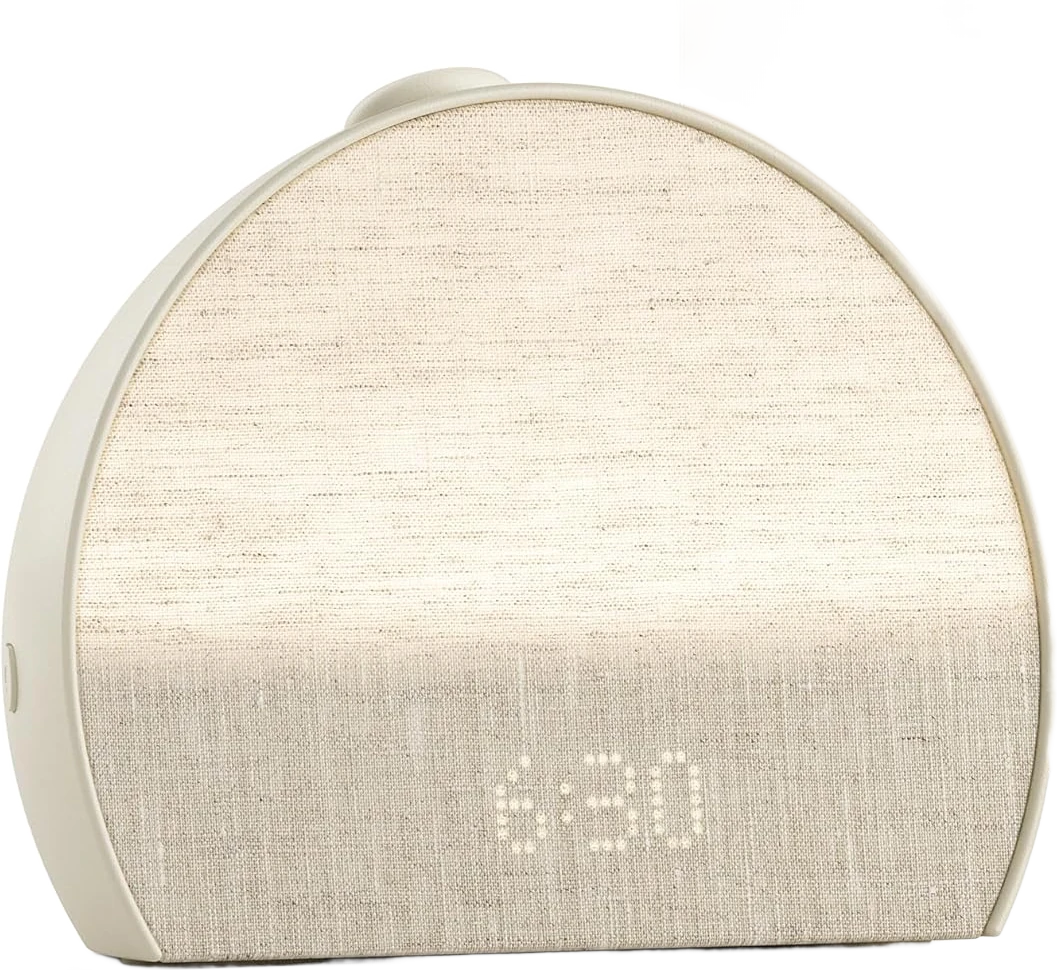 #1 of 8 · Best overall✓ Product photos checked Sep 7, 2026
Real retailer photo, cut out. Label unedited.
Buy it. The best-rounded sunrise clock you can buy — light, sound machine and wind-down in one, on real buttons. The Restore 3 is the most polished all-in-one in the category: gradual sunrise, real sound machine, sunset wind-down and smart reading light, controlled day-to-day from three physical buttons.
$170
Why It Scores 8.8 — And The Label Line Behind Each Number
Light quality
30% of score
A genuinely gradual warm-to-bright sunrise paired with a dimmable smart light that doubles as a proper reading lamp — more flexible than the fixed Philips domes as everyday bedside lighting. It scores just under the clinical tier because Philips’ validated ~300-lux, red→amber→white ramp remains the category’s light benchmark. For waking gently, the Hatch dawn is excellent; for pure light credentials, the HF3520 still leads.
- Light
- Gradual sunrise + dimmable smart reading light
Wake reliability
20% of score
The sunrise is backed by escalating alarm sounds through a forward-facing speaker, so the light is the gentle lead-in and the audio is the guarantee — the correct architecture. It wakes most sleepers dependably. It stops short of the Philips HF3650’s dedicated loud backup-beeper failsafe, which remains the specialist tool for people who sleep through everything.
Features
20% of score
The fullest feature set on the list, and the reason it wins overall: a real sound machine, a sunset wind-down routine for falling asleep, customizable wake routines, and a smart reading light — one coherent system rather than a clock with extras bolted on. The membership question is scored under Value, not here; on what the hardware can do, nothing in the lineup matches it.
Controls & usability
20% of score
Three real physical buttons run the daily interactions — start sounds, snooze, trigger routines — so the phone stays out of the bedroom at night. Setup and deep customization live in the well-made Hatch app, which is the right split. The forward speaker and premium nightstand design round it out. Only a fully button-programmable offline unit (Lumie) is more self-sufficient.
- Controls
- 3 phone-free physical buttons; app for setup/customization
Value
10% of score
$170 for the hardware is defensible for what it does — but the paid Hatch membership for premium guided content is an ongoing cost no other pick on our list carries, and it drags the value score down. You can happily run the core experience without paying monthly; just budget honestly if the guided content is the reason you’re buying.
- Price
- ~$170
- More Specs
- Wake backup
- Escalating alarm sounds via forward-facing speaker
- Sound
- Sound machine + sunset wind-down routines
- App / sub
- App for full content; premium guided content is a paid membership
Photos checked.This product has no Supplement Facts panel; the retailer’s listing photos were reviewed Sep 7, 2026.
Marketing Claims Vs. Reality
Wakes you gently with a customizable sunrise and sounds.
The Restore 3’s core function is a gradual warm-to-bright sunrise backed by escalating alarm sounds, with customizable wake routines — exactly as marketed, and consistent with the dawn-simulation evidence (Gabel 2013; Giménez 2010) that a gradual light ramp reduces sleep inertia versus an abrupt alarm.
Complete bedtime system: sound machine, wind-down and reading light in one.
The unit genuinely combines a sound machine, a sunset wind-down routine and a dimmable smart reading light with the sunrise alarm — the fullest hardware feature set in our eight-pick lineup, and the basis of its 9.8 Features score.
Phone-free control at the bedside.
Day-to-day interactions (sounds, snooze, routines) run on three real physical buttons — true phone-free operation where it matters. But initial setup and routine customization require the Hatch app, so it is not an app-free device in the way the Philips or Lumie units are. We mark it PARTIAL: phone-free daily, app-dependent for configuration.
Full sleep-content library included.
Core sounds and routines work without paying, but the richest guided content — the deep meditation, sleep-story and premium-routine library — renews as a paid Hatch membership. Buyers should treat the membership as an optional ongoing cost, not an included feature. This is the main reason Value scores 6.4.
What Our Test Actually Found
It wins on completeness, not on peak light
Ranked purely on light output, the Philips SmartSleep units — with a sunrise validated to roughly 300 lux at the pillow — would take the top slot. The Restore 3 wins our ranking because a wake-up light lives inside a whole evening-to-morning routine, and Hatch is the only product here that owns that entire routine well: a sunset wind-down and sound machine to fall asleep, a gradual dawn plus escalating audio to wake, and a proper reading light in between. If your problem is ‘my mornings and evenings are chaotic,’ this is the tool. If your problem is purely ‘I want the best light,’ buy the HF3520 and save $50.
The membership is the honest asterisk on the price
The $170 sticker is only part of the cost story. Hatch’s premium guided content — the large meditation and sleep-story library and extra routines — sits behind a paid membership that renews monthly. Nothing else in our eight-pick lineup carries a subscription, and our scoring philosophy explicitly rewards clocks that do their whole job without one; that’s why the Restore 3’s Value score (6.4) is the lowest number on its card even as it wins overall. The mitigating fact: the core wake-up experience — sunrise, alarm sounds, sound machine, wind-down — works without paying. Decide which Hatch you’re buying before you click.
Three physical buttons solve the app-clock problem
The classic failure of smart alarm clocks is needing your phone to do anything — which puts a dopamine slot machine in your hand at bedtime and a fumbling unlock between you and snooze at dawn. Hatch’s answer is the right one: three real, reachable physical buttons plus a forward-facing speaker handle every daily interaction, while the app is reserved for setup and deeper customization. In our Controls & usability scoring that split earns a 9.2 — behind only the fully offline Lumie approach, and well ahead of app-locked rivals.
The dawn-simulation evidence backs the category, with limits
The reason to own any sunrise clock: controlled studies of artificial dawn show real wake-quality benefits. Gabel 2013 found a dawn simulation ramping to 250 lux improved morning cognitive performance, mood and wake-time cortisol in sleep-restricted adults; Giménez 2010 found artificial dawn significantly reduced self-reported sleep inertia — while honestly noting it did NOT shift melatonin onset, so the benefit is in how you wake, not in re-timing your body clock. The Restore 3’s gradual ramp puts it squarely in the design space those trials tested. Keep the same honest frame: gentler mornings, yes; a cure for a chaotic sleep schedule, no.
Full analysis: all pros & cons (8), buy if / skip if
- The most polished all-in-one in the category: sunrise, sound machine, sunset wind-down and smart reading light
- Day-to-day control on three real physical buttons — no phone needed at the bedside
- Escalating alarm sounds back the light, so the gentle wake still has a guarantee
- Forward-facing speaker and a genuinely premium, nightstand-friendly design
- Deep, customizable wake and wind-down routines for people who want a full sleep system
- Richest guided content (meditations, sleep stories, extra routines) renews as a paid Hatch membership
- Pure light output is excellent but below the Philips clinical ~300-lux benchmark
- Initial setup and routine customization require the app — not a fully offline device
- You want one polished device for the whole bedside routine — wind-down, sleep sound, sunrise and reading light
- You want real phone-free physical buttons for the 6 a.m. interactions
- You value a genuine sound machine and a sunset wind-down alongside the wake light
- You don’t mind an app for setup and (optionally) a paid membership for premium content
- You refuse any app or subscription on principle — the Philips HF3520 (#2) or Lumie Shine 300 (#6) run on buttons alone, forever
- You sleep through alarms — the Philips HF3650 (#3) has the strongest backup-beeper failsafe here
- You just want the cheapest real sunrise — the JALL Wake Up Light (#8) covers the basics for about $35
The Restore 3 is the most polished all-in-one in the category: gradual sunrise, real sound machine, sunset wind-down and smart reading light, controlled day-to-day from three physical buttons. Escalating alarm sounds back the light for reliable wake-ups. The caveats: premium guided content is a paid membership, and the Philips lights still beat it on pure clinical light output. As a complete system, it’s the pick.
The Hatch Restore 3 wins our sunrise-alarm-clock ranking not by having the single brightest light, but by being the most complete, most polished wake-up system in the category. In one nightstand-friendly unit you get a gradual warm-to-bright sunrise, a real sound machine, a sunset wind-down for falling asleep, and a dimmable smart reading light — and, crucially, the daily interactions all run on three real physical buttons with a forward-facing speaker, so you are not fumbling for a phone at 6 a.m.
The honest limits are two. First, the membership: Hatch’s richest guided content — the deep library of meditations, sleep stories and premium routines — renews as a paid subscription, and that recurring cost is why Value is the lowest score on this card. The core sunrise, sounds and routines work without paying, but you should know where the paywall sits before you buy. Second, pure light: the Restore 3’s sunrise is excellent, but the Philips SmartSleep lights remain the clinical benchmark at a validated ~300 lux. If you want one device to own the whole bedside routine — wind-down, sleep sound, dawn, reading light — nothing here matches it. Here’s the full breakdown.
Buy it as the complete bedside system — just decide the membership question first.

The Hatch Restore 3 is the best sunrise alarm clock for most people because it’s the only product here that nails the whole routine: a real sound machine and sunset wind-down to fall asleep, a genuinely gradual sunrise backed by escalating audio to wake up, and a dimmable reading light in between — all driven day-to-day from three physical buttons so your phone stays out of it. That completeness, executed this cleanly, is why it holds the #1 slot at 8.8.
Go in with both caveats clear. The premium guided content is a paid membership — the core experience works without it, but if the meditation and sleep-story library is why you’re buying, that’s a recurring cost no other pick carries. And if what you actually want is maximum light with zero strings, the Philips HF3520 (#2) delivers the clinical ~300-lux benchmark with no app and no subscription for less money, while heavy sleepers should pay up for the HF3650’s backup-beeper failsafe (#3). For everyone who wants one premium device to run the bedside, this is the one.
If This Doesn’t Fit — Try These
 02
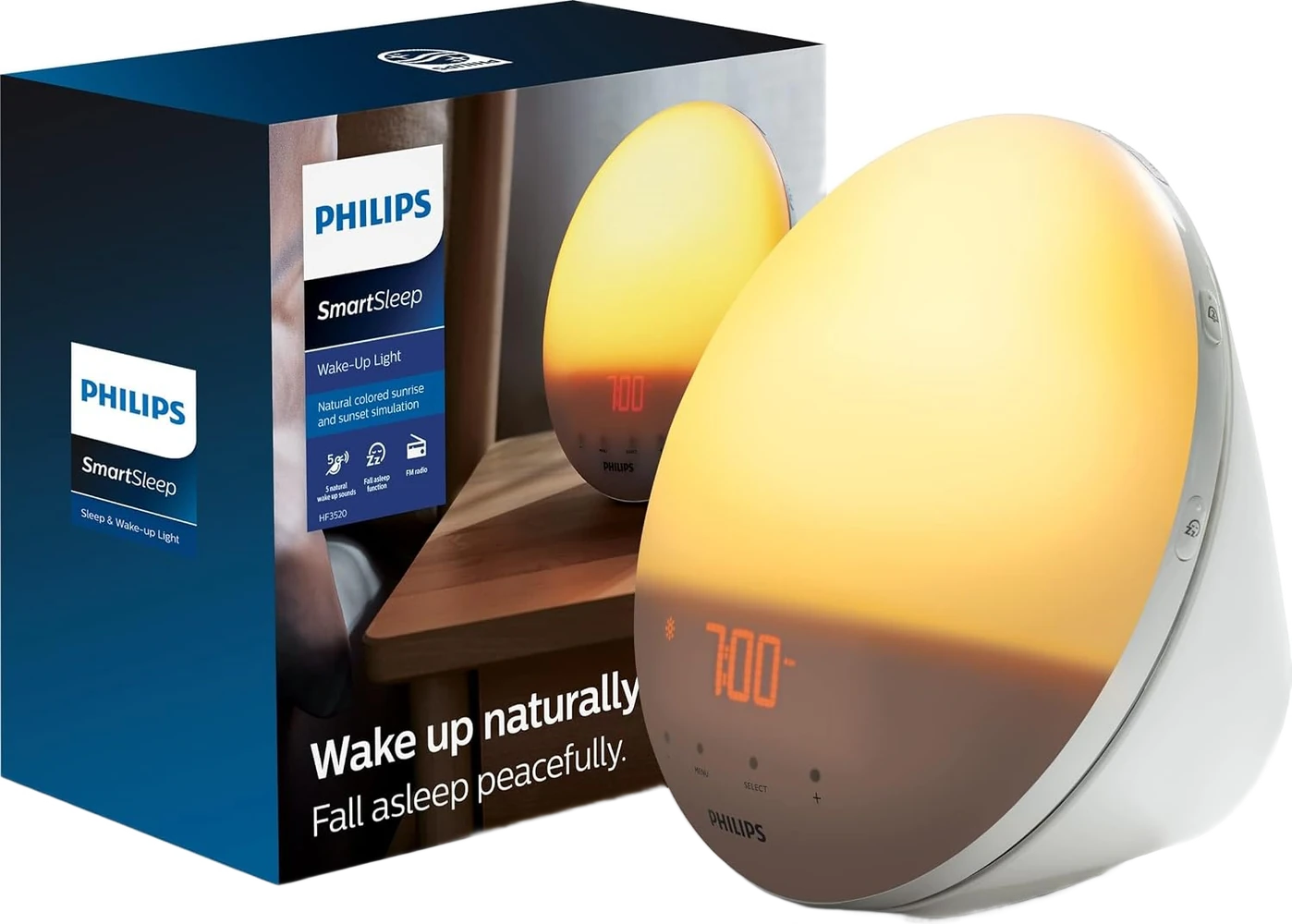
Philips SmartSleep HF3520
If light quality and a clean ownership experience are what you care about, this is the pick — and it’s the one we point app-averse buyers to first.
 03
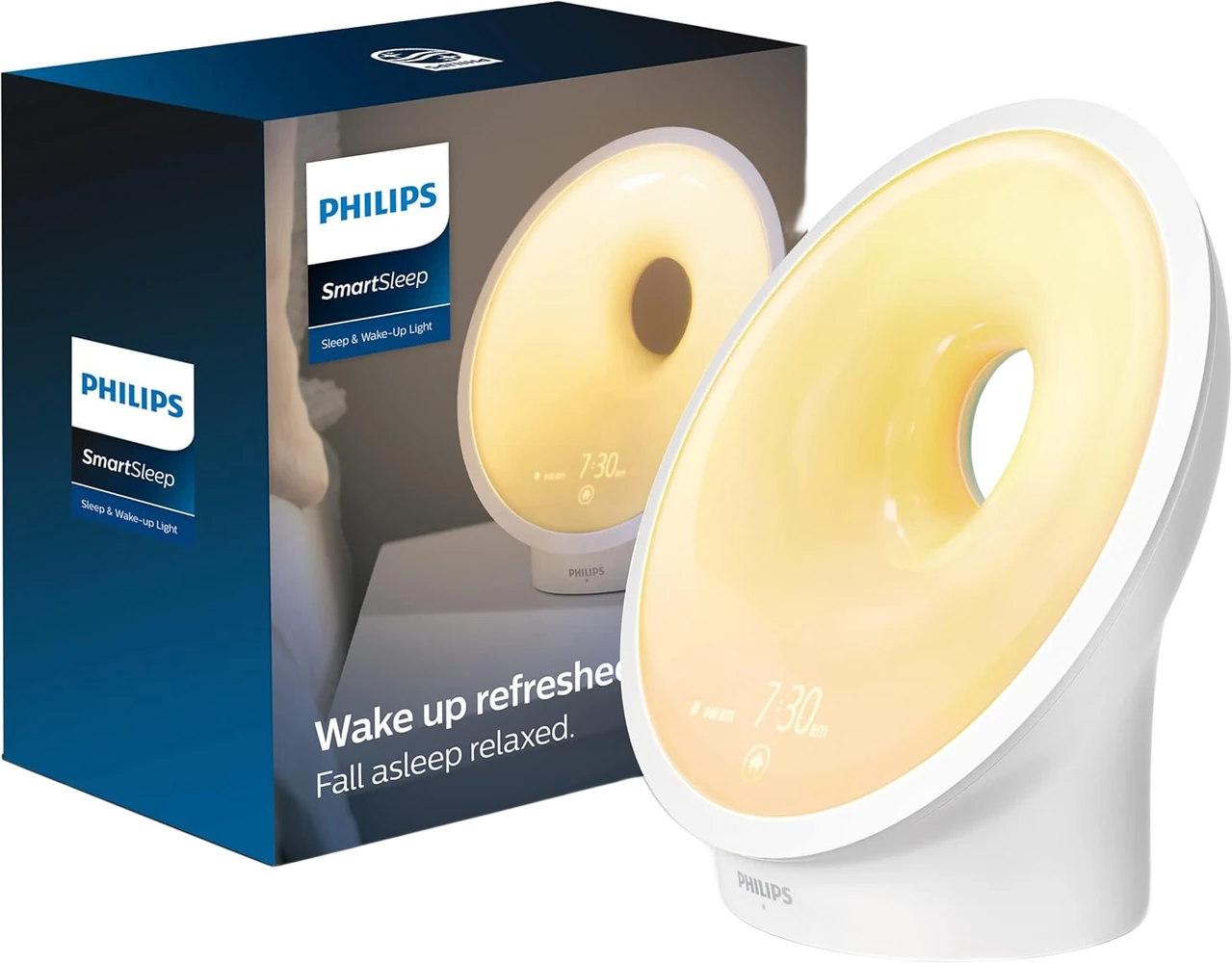
Philips SmartSleep HF3650
Most people don’t need to spend up to the HF3650 — but if alarms have historically failed you, this is the one to buy.
 04
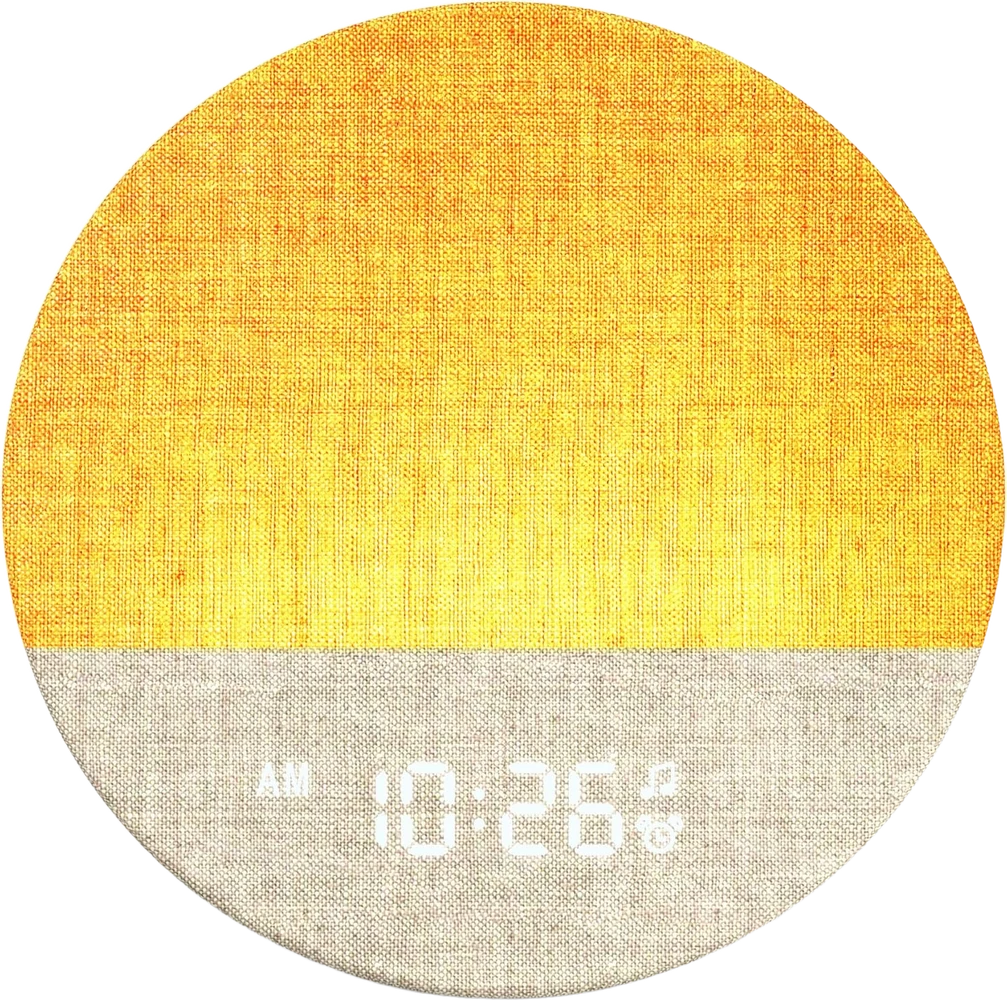
Dreamegg Sunrise 1
If you want a sunrise clock that doubles as a real sound machine, this is the pick — and it earns that label honestly, carrying true white, pink and brown noise rather than a few looped nature tracks.
Quick Answers
Do I need the Hatch membership for the Restore 3 to work?
No — and that distinction is the whole buying decision. The core wake-up experience (the gradual sunrise, alarm sounds, sound machine and sunset wind-down) works without paying a monthly fee, and day-to-day control runs on the three physical buttons on the unit itself. What the paid Hatch membership adds is the premium content layer: the deeper library of guided meditations, sleep stories and extra routines. If you want an excellent sunrise clock with a sound machine, the hardware alone delivers that. If you want the full guided wind-down ecosystem, budget for the membership as an ongoing cost — that recurring fee is exactly why our Value score is the lowest number on this card.
Can I use the Restore 3 without my phone?
Day to day, yes. The Restore 3’s headline usability win over app-locked rivals is its three real physical buttons plus the forward-facing speaker — you can start sounds, snooze, and run your wake and wind-down routines from the device itself. You will use the Hatch app for initial setup and for building or customizing routines, which is the trade of any connected clock. Our scoring rewards exactly this split: an app for deep configuration is fine, but the 6 a.m. interactions must work on physical buttons — and here they do, which is why Controls & usability scores 9.2.
How does the Restore 3’s light compare to the Philips SmartSleep lights?
The Restore 3’s sunrise is a genuinely gradual, warm-to-bright ramp paired with a dimmable smart reading light — very good, and more flexible as a bedside lamp than the Philips units. But the Philips SmartSleep lights (HF3520 and HF3650) remain the clinical-light benchmark of the category, with a sunrise validated to roughly 300 lux at the pillow over a ~30-minute red→amber→white ramp. That’s why the Hatch scores 8.8 on Light quality while the HF3520 scores 9.6. The Hatch wins the overall crown on completeness — light plus a real sound machine plus wind-down in one polished unit — not on peak light output.
Is the Hatch Restore 3 good for heavy sleepers?
It’s decent but not the specialist. The Restore 3 backs its sunrise with escalating alarm sounds, which wakes most people reliably — that’s an 8.6 on our Wake reliability axis. But if alarms have historically failed you, the purpose-built answer is the Philips HF3650 (#3 in our ranking), whose loud backup-beeper failsafe is the strongest anti-oversleep design on the list. Buy the Hatch for the best-rounded system; buy the HF3650 if oversleeping is the specific problem you’re solving.
Sources & Further Reading
3 sources — studies link to PubMed, product specs to the manufacturer
- [1] Gabel 2013 PMID 23841684 — Effects of artificial dawn and morning blue light on daytime cognitive performance, well-being, cortisol and melatonin levels. Lab study, 17 sleep-restricted participants: a morning dawn-simulation light gradually rising to 250 lux improved cognitive performance, mood and well-being and raised wake-time cortisol versus dim and blue light. The core evidence that a gradual simulated dawn — the Restore 3’s central function — helps you wake.
- [2] Giménez 2010 PMID 20653451 — Effects of artificial dawn on subjective ratings of sleep inertia and dim light melatonin onset. Field study with a wake-up light: artificial dawn significantly reduced self-reported sleep inertia (easier, more alert waking) — but did NOT shift dim-light melatonin onset. The benefit is in how you wake, not in re-timing your body clock; we state the same limit for the Restore 3.
- [3] Amazon listing 2026 — Hatch Restore 3 — Sunrise Alarm Clock, Smart Light, Sleep Audio (Amazon product listing). Product facts on this page — the sunrise + sound machine + smart light combination, physical-button control, sleep-sound library and membership-gated premium content — verified against the live Amazon listing (ASIN B0DLLSCVZW, checked 2026-07-20). No performance numbers are invented.
Affiliate disclosure: every Amazon link uses our Associates tag (superachieverclub-20). We earn a small commission at no cost to you; it funds independent reviews. We never accept payment to change a ranking.
Affiliate Disclosure: This page contains affiliate links. The linked affiliate partner may earn a commission from qualifying purchases, at no additional cost to you. For republished material, product recommendations belong to the credited source.